
An ordinary dinner has long ceased to be just food. Gastronomic impressions, unusual presentation formats, dinner shows, and authorial work with atmosphere — this is what today determines whether a guest returns or forgets the establishment within a week. Restaurants around the world compete not only with recipes but also with emotion: some bet on location, others on technology, and still others turn dinner into a theatrical performance from beginning to end.
At the center of our analysis is the restaurant-theater Gajah Putih in Bali, where theatricality and dish presentation are united into a single dramaturgy of the evening, rather than existing as a separate "Instagram gimmick."
Why Restaurants Sell More Than Just Food
The average check at fine dining establishments is rarely explained by the cost of ingredients alone. As a rule, the guest pays for time, staff attention, story, and the feeling that the evening was one of a kind. The industry is gradually shifting from dish to experience: the restaurant becomes not a dining point but a leisure format on par with theater or a concert.
Exoticism in this sense is not decoration but a working tool. It justifies the price, creates a talking point after the visit, and, importantly, generates organic content on social media without additional advertising costs. This is precisely why restaurant owners increasingly invest not in a third dish on the menu but in the very experience of the dinner.
Show During Dish Presentation
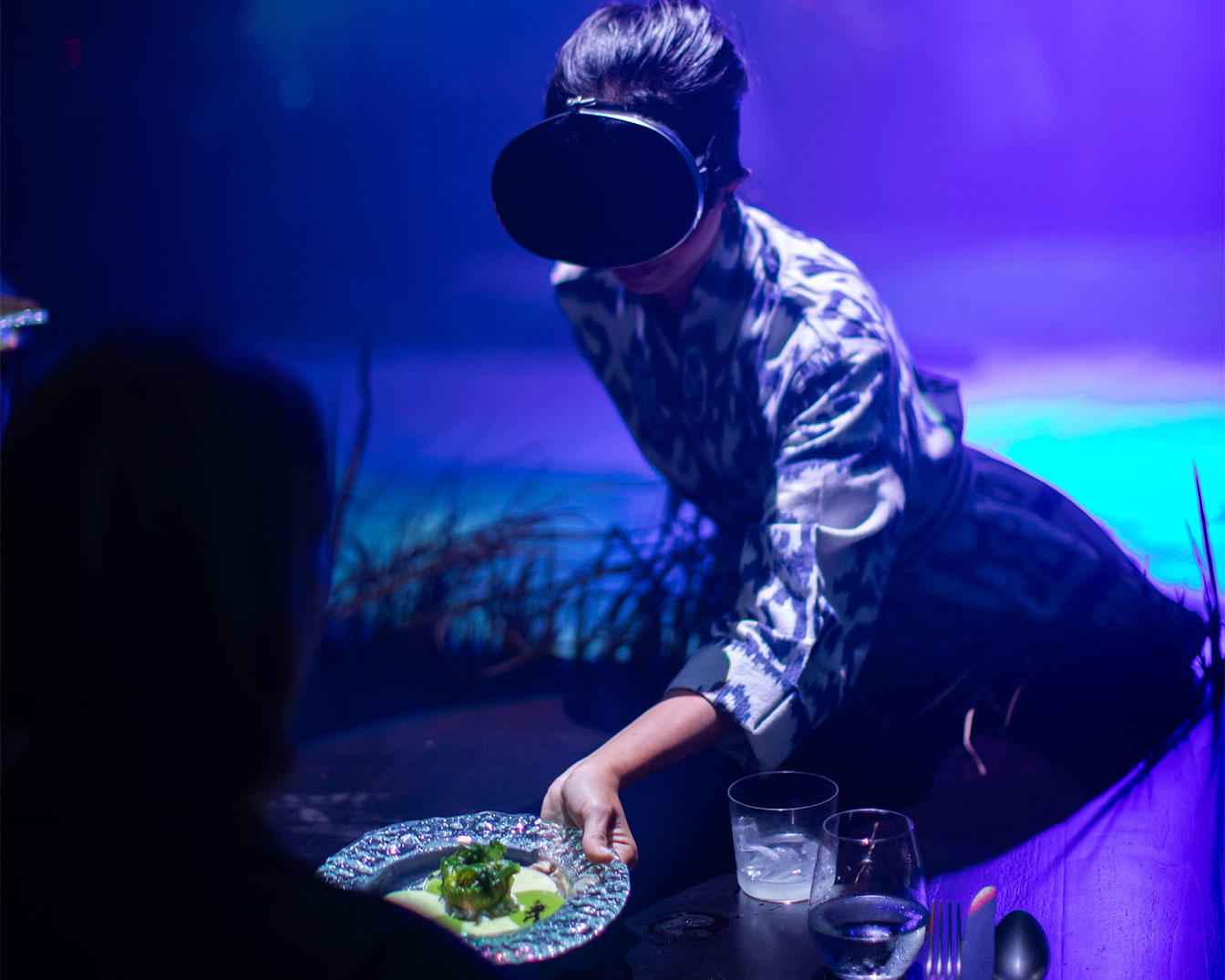
A gastronomic show is a technique where dish presentation is synchronized with light, sound, smoke, or projection. It seems logical that this format is most often associated with the phrase "restaurant exoticism": it is instantly perceived by the guest and easily turns into video content for social media.
One of the most cited examples is Ultraviolet by chef Paul Pairet in Shanghai, where each dish is served in its own scenography: projections on the walls, scents in the room, and musical accompaniment all change. At the other pole of the genre is Spain's Sublimotion in Ibiza, where VR headsets and molecular cuisine are added to special effects, and a twenty-course dinner turns into an almost theatrical production with a ticket costing several thousand euros.
Tasting Sets as the Foundation of Show Presentation
Before adding effects, most establishments build a set menu: a fixed sequence of dishes without the option of choice. This format reduces the guest's anxiety of choice while giving the kitchen the ability to control the rhythm of the evening — it is onto this framework that the show component is then layered.
Technology on the Edge of Fantasy: VR and Projections
At Sublimotion, the guest puts on VR headsets between courses, and 360-degree projections change the interior of the room literally before their eyes. This is perhaps the extreme point of technological exoticism: not every restaurant is willing or able to invest in this level of production, but the very existence of such a format sets the bar for the entire industry.
Extreme Location as a Technique
Sometimes the main dish of the evening is not the food but the place where it is served. An unusual location enhances the emotional value of any, even simple, dish and turns dinner into an adventure before the first course.
Dinner at a Height of 50 Meters
The Dinner in the Sky format lifts a table with guests and a chef by crane to a height of about fifty meters right in the middle of the city. The project has no permanent address: the team brings the structure to different cities around the world, so the specific venue and date should be confirmed at the time of booking.
Underwater Dinner with a View of Reefs
Ithaa Undersea Restaurant in the Maldives became the world's first fully underwater restaurant with an acrylic dome: guests dine surrounded by reefs and fish, literally beneath the ocean's surface. The location can be viewed in advance on the map — Ithaa Undersea Restaurant, Rasdhoo Atoll, Maldives.
Live Music and Performance
Live music rarely remains just background in restaurants that bet on impressions. Usually it is woven into the dramaturgy of the evening: the pace of dish service adjusts to the changing musical numbers, and sometimes musicians or dancers themselves become part of the evening's plot rather than an invited addition to it.
In Bali, for example, the traditional kecak dance is often used by restaurants precisely this way — as a cultural layer that makes dinner more authentic and deeper, rather than just "background ethnic" for tourists.
Collaborations with Wineries and Local Farmers
A collaboration with a winery adds exclusivity to the menu: limited batches, authorial pairing, and the story of the product's origin all work toward the feeling that such a dinner cannot be repeated at another establishment. In most cases, such partnerships are accompanied by a short story from the sommelier about where a particular wine comes from and why it was chosen for this specific dish.
The same applies to local farmers: the shorter the "farm to plate" chain, the more convincing the dish's story sounds to the guest. Few people consider it, but this transparency of product origin has gradually become an independent marketing asset for restaurants, not just a menu detail.
Masterclasses and Compliments from the Chef
Involving the guest in the cooking process and a gift from the kitchen solve different tasks, although they are often confused with each other.
Masterclass as Part of the Evening
A masterclass from the chef involves the guest in the process: they shape dumplings themselves, toast spices, or assemble dessert under the chef's guidance. This works toward a sense of co-authorship and usually extends the duration of the visit, along with the average check.
A Small Gesture That Is Remembered
A compliment from the chef works differently: it requires no participation from the guest but creates an effect of personal attention. A small dish "from the establishment" without explanation is often remembered better than the main menu — precisely because the guest did not expect it.
Original Interior and "Instagrammability"
The design of the dining room is, as a rule, the first reason to visit a restaurant even before getting acquainted with the menu. A themed interior provokes organic UGC content: guests photograph the space themselves and share it on social media, which for the establishment is essentially equivalent to free advertising.
It is also important that photogenicity continues to hold attention after the visit: a post in the guest's feed brings the restaurant back to their followers, some of whom become new visitors.
Collaborations with Food Bloggers
If the interior works for organic content, then collaboration with food bloggers amplifies it purposefully. The restaurant invites an influencer for a tasting, who films the show elements and publishes them for their audience — thus the effect of dish presentation continues to work weeks after the visit itself.
It is worth distinguishing between two layers of "attracting guests": what happens at the table and what happens in the digital space around the restaurant. Both layers amplify each other but solve different marketing tasks.
Gajah Putih Restaurant-Theater: When Exoticism Is the Entire Structure of the Evening
Most of the techniques above are used selectively: a show as one of the evening's moments, music as a complement to service. The restaurant-theater Gajah Putih in Ubud, Bali, is structured differently — here theatricality is not an addition to dinner but its entire structure, from the first to the last course.
Location on the map: Gajah Putih, Ubud, Bali. The establishment operates Wednesday through Sunday, from 6:30 PM to 9:00 PM, and positions itself as a fine dining restaurant & dinner theater — that is, simultaneously a haute cuisine restaurant and a theatrical stage.
Two Plots — Lingkaran and Malam
The Gajah Putih program is built around two active show plots. Lingkaran tells the story of a Balinese morning. Malam, in turn, is dedicated to the evening — sunset and the night traditions of Bali. Each plot runs as an independent performance, and the guest knows in advance which story they will see that evening.
A Menu Built Around the Plot, Not Vice Versa
The key difference between Gajah Putih and a classic "dinner with a show" is that the tasting menu here is synchronized with the plot of the performance, not selected for it after the fact. The morning flavor palette of Lingkaran and the evening palette of Malam are built by chef Alexey Dokuchaev from local farm products: first the dramaturgy of the story is determined, and only then is the sequence of dishes assembled around it. It is precisely this linkage of menu and plot that makes Gajah Putih a flagship example of the genre: here the tasting set from the first section of the article and the gastronomic show from the second are united into a single system, rather than existing in parallel with each other.
What Guests Say
Reviews on Google and Tripadvisor usually agree on one thing: visitors describe the evening not as dinner with entertainment but as a holistic immersive experience, comparable in atmosphere to famous cinematic images of haute cuisine. Guests particularly note the quality of service and how organically dish presentation is woven into the plot of the performance. Booking is available through TableCheck, with alcoholic and non-alcoholic pairing options.
How to Choose "Your" Restaurant-Theater
Before booking, it is worth clarifying several practical details: the duration of the evening (for dinner theater formats it is usually longer than for a regular dinner — from one and a half to three hours), the cost of the set with and without pairing, the dress code, and how suitable the format is for children or a large group. Separately, it makes sense to ask whether the show program changes depending on the date of the visit, as is the case with Gajah Putih and its Lingkaran and Malam plots.
- Gajah Putih — Ubud, Bali. Dinner theater with two plots (dawn and sunset), menu synchronized with the performance. Open on map
- Ultraviolet by Paul Pairet — Shanghai, China. Multisensory dinner: light, sound, scent, and projections synchronized with each dish. Open on map
- Sublimotion — Ibiza, Spain. Molecular gastronomy, VR headsets, and 360° projections, one of the most expensive dinners in the world. Open on map
- Ithaa Undersea Restaurant — Rasdhoo Atoll, Maldives. The world's first fully underwater restaurant with an acrylic dome. Open on map
- Dinner in the Sky — various cities worldwide. Dinner at a table lifted by crane approximately 50 meters above the city; the address depends on the current venue and is confirmed at the time of the event.
Frequently Asked Questions
How long does a dinner show last?
At most dinner theater establishments, the evening takes from one and a half to three hours — the time depends on the number of courses and the duration of the performance.
Do I need to book a table in advance?
Is this format suitable for children?
Yes, reservations are usually needed several days in advance, and for flagship formats like Gajah Putih or Ultraviolet — sometimes several weeks ahead, especially during high tourist season.
