
What Makes Bali Food Special?
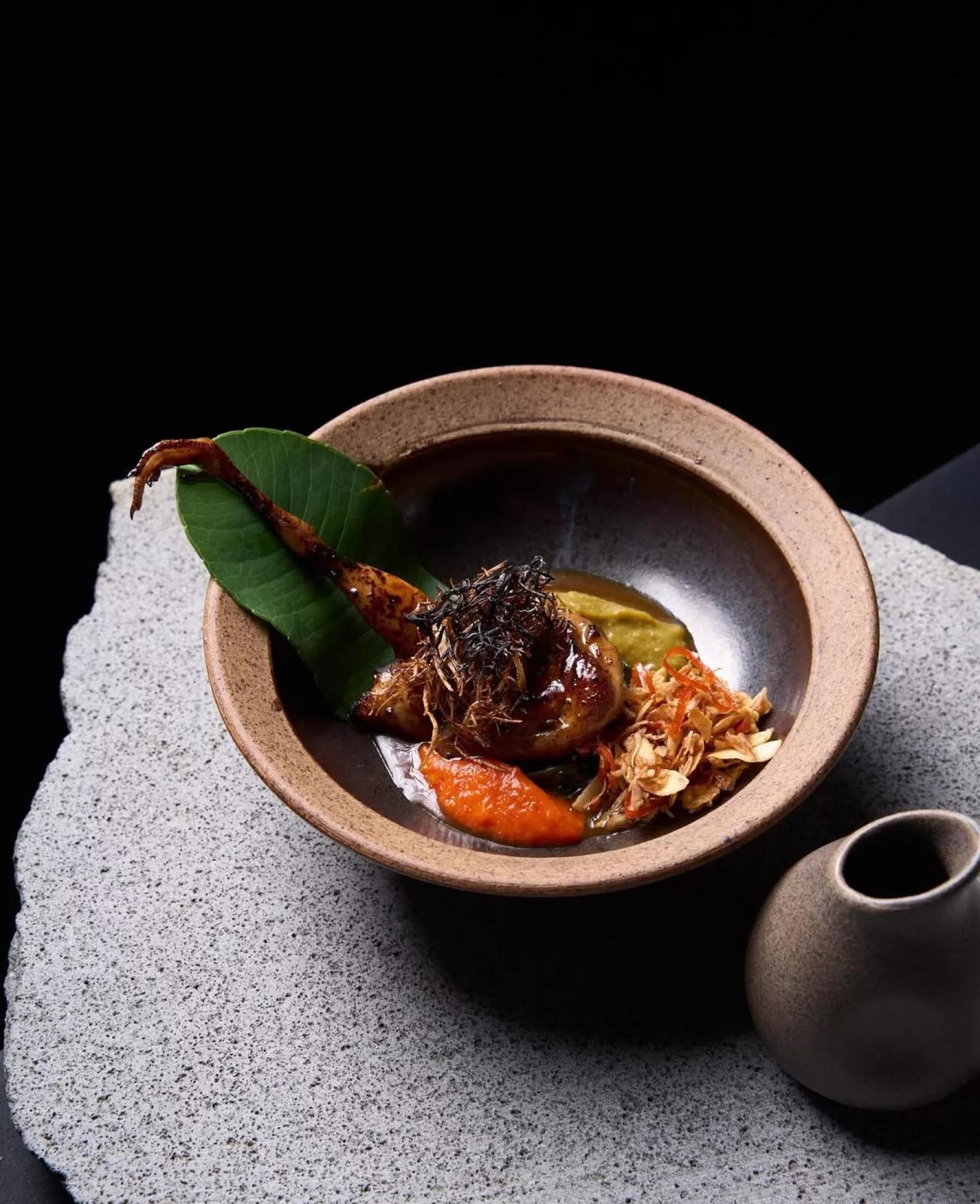
What makes Bali food special? For Gajah Putih the answer begins on the plate. Sweetness, acidity, heat, fermentation and smoke arrive at the same time, and a sauce that looks simple can hold ten or fifteen ingredients. A full dinner is built differently too: instead of one central plate, you get a run of dishes that only make sense together.
Our answers cover why Ubud tastes different from Seminyak or Canggu, how traditional flavors survive a fine dining kitchen, what drives the price of a tasting menu, and the booking mistake that makes guests miss part of the evening.
The food: what makes Bali food special
What does Ubud's food scene have that you can't get anywhere else in Bali?
Probably the biggest difference is the way Ubud brings very different worlds together in one place. There is a strong Balinese culture, traditional ingredients and cooking techniques, an incredible number of local farmers, and at the same time, chefs, artists, and creative people from all over the world have been coming here for decades.
That is why food in Ubud rarely exists separately from its surroundings. You can have dinner almost in the middle of the jungle, next to a temple, inside a historic building, or in a space where contemporary design meets traditional Balinese architecture.
Seminyak or Canggu may have a more urban and international dining scene. In Ubud, you feel Bali itself much more strongly.
What should a first-time visitor expect from a full Balinese dinner that they wouldn't expect at home?
Probably the first thing is a completely different architecture of flavor.
Indonesian cuisine often brings sweetness, acidity, heat, fermentation, spices, and smoke together at the same time. For someone accustomed to European cuisine, some of these combinations can initially feel very intense.
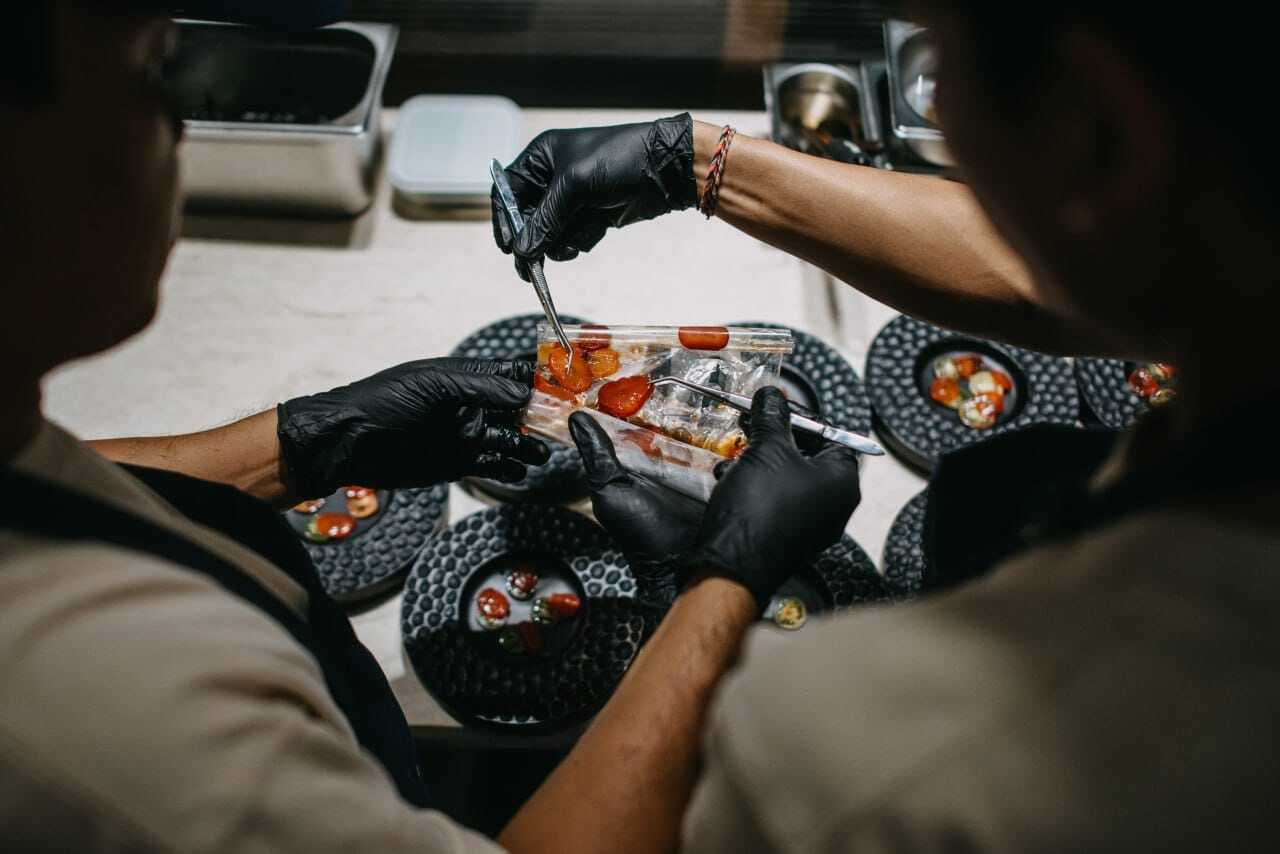
The second thing is the number of spices and components that can exist within a single dish. Something that looks like a simple sauce may contain ten or fifteen different ingredients.
And third, the culture of eating itself is historically different. Indonesian cuisine is much less centered around one main ingredient on the plate. Very often, what matters is the balance between several dishes, textures, and flavors.
So a great Balinese or Indonesian dinner is more like a journey through many different flavors than a meal built around one central plate.
How do you translate traditional Indonesian flavors into a fine dining format without losing what makes them Indonesian?
For me, it is very important not to begin with the question: "How do we make this Indonesian dish more European?"
Instead, you first have to understand what actually makes that flavor Indonesian. It might be a particular combination of spices, a method of cooking over fire, fermentation, sambal, the use of coconut, or a specific balance between sweetness, acidity, and heat.
Once you understand that, you can change the form of the dish, its texture, presentation, or technique. But if the guest can no longer recognize the character of the original flavor, then we have gone too far.
Contemporary presentation should enhance a traditional flavor, not disguise it.
How has Bali's fine dining identity changed in the last five years?
I think that in the past, fine dining in Bali often tried to reproduce international models. European techniques, imported ingredients, very formal service – a restaurant could physically be in Bali while having almost no gastronomic connection to the island itself.
That is changing.
The strongest restaurants today are working much more with local ingredients, Indonesian flavors, fermentation, spices, and traditional cooking techniques, while applying contemporary presentation and international standards of service.
So we are moving away from the idea of creating "a good European restaurant in Bali" toward creating contemporary high-end cuisine that could only have been born here. To me, that is much more interesting.
The experience: dinner as a story
When a guest can only pick one restaurant in Ubud, what separates the right choice from the wrong one?
It really depends on what kind of experience the person is looking for.
If the goal is simply to eat well, Ubud has a huge number of excellent restaurants. But if you only have one evening, I would choose a place that leaves you with more than just the memory of a particular dish.
I think the right restaurant for a traveler should somehow tell the story of the place they are visiting – through the ingredients, the interior, the people, the music, the culture, or the format of the evening itself.
Especially today, when excellent restaurants can be found in almost every major city in the world, good food alone is no longer enough. When you are in Bali, you want to experience something that cannot be completely recreated in London, Paris, or Singapore.
That is exactly what we wanted to create at Gajah Putih.
What made you want to build a dining experience around performance instead of just food?
Because I have always been interested in creating a restaurant that people experience through more than just taste.
Bali has an incredibly rich culture of dance, music, costume, ritual, and visual art. It would almost feel strange to be here and use only the gastronomic side of that culture. That is where the idea of bringing two worlds together – restaurant and theater – came from.
At the same time, it was very important to us that it never felt like a tourist show with dinner simply added to it. The food has to remain a strong and independent part of the experience, while the performance complements it and creates an emotional context around the evening.
Ideally, by the end, a guest should not be able to say exactly what they enjoyed most – the food, the space, or the performance itself. They should remember it as one complete evening at Gajah Putih.
How do you decide how many courses a tasting menu should have, and what determines the order?
The number of courses itself does not mean very much. More is not always better. What matters to us is the rhythm of the entire dinner.
At the beginning, the dishes should usually awaken the appetite. Then the flavors gradually become deeper and more intense, leading toward the main culinary climax, followed by a transition into dessert.
At the same time, you have to consider not only flavor, but also portion size, temperature, texture, and simply how much food a person can comfortably enjoy over the course of an evening.
In our case, there is another important element: the performance. The menu has to work together with the story and rhythm of the evening. Sometimes a pause between courses is not something the kitchen needs – it is something the story happening in front of the guests needs.
What's harder to get right when a dinner is built around a live performance: the food or the timing?
The timing.
In a conventional restaurant, if a dish needs another two minutes, the kitchen can usually take those two minutes. When there is a live performance, everything becomes much more complicated. The kitchen, waiters, lighting, music, and performers have to function almost as one system.
A dish needs to be ready at exactly the right moment in the performance. But at the same time, the quality of the food can never be sacrificed for the schedule.
It is a little like having two stages operating simultaneously – the stage the guests can see and the kitchen behind it. Synchronizing those two worlds is one of the most difficult parts of creating this kind of experience.
The decision: what to look for and what to avoid
What's the difference between a restaurant that just looks expensive and one that's genuinely fine dining?
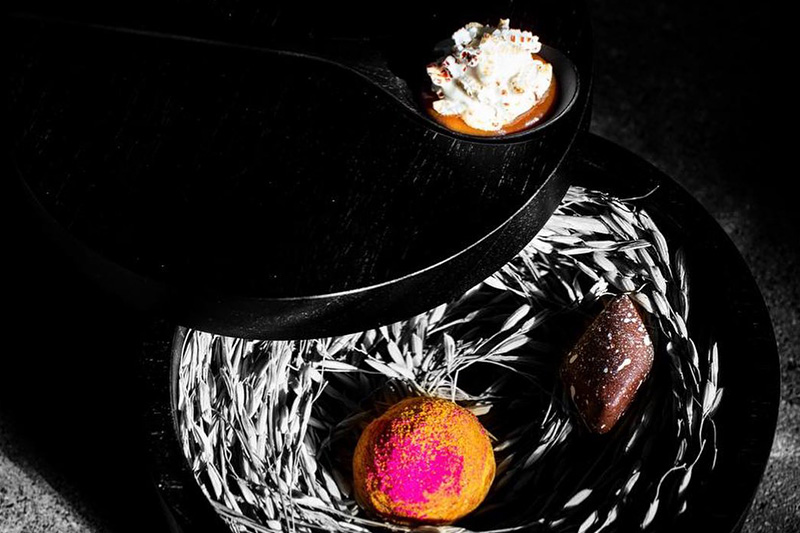
Creating an expensive-looking interior is relatively easy. You can buy beautiful furniture, use expensive tableware, and work with premium ingredients. But fine dining does not begin there.
For me, it is about an enormous number of details that the guest may not even consciously notice: the temperature of a dish, the sequence of courses, the lighting, the music, the distance between tables, the way a waiter explains a dish, the temperature of the wine, or the exact moment a plate is cleared.
Most importantly, all of these elements have to work together. Genuine fine dining is about carefully controlling the guest experience from the moment they enter the restaurant until the moment they leave.
What actually separates a 5-star dining experience from a merely good one?
Consistency.
Creating one outstanding dish is relatively easy. What is much harder is creating an entire evening without weak moments. In a five-star experience, there should not be a moment when the guest thinks, "Everything was wonderful, except for this one thing."
The food, service, music, lighting, temperature, cleanliness, scent of the space, and the way the team works all need to exist at approximately the same level.
And there is one more thing that is extremely important to me: the emotional memory. A month later, someone may no longer remember every ingredient in a particular dish. But they will remember how the restaurant made them feel.
What actually drives the price at the high end: ingredients, technique, or experience?
All of them, but the higher the level of the restaurant, the less the price is determined only by the ingredients on the plate.
Of course, excellent ingredients are expensive. A strong team is expensive. There is also an enormous amount of preparation that the guest never sees.
But at a high-end restaurant, the guest is also paying for the space, the number of staff members relative to the number of guests, team training, design, tableware, lighting, music, and countless small details. When you add a live performance, there are also performers, costumes, production, technical teams, and rehearsals.
So at the highest level, the guest is not buying a collection of ingredients. They are buying several hours of a very carefully created experience.
What's a mistake even experienced diners make when booking fine dining in Ubud?
Probably treating it as just another restaurant reservation squeezed between other plans for the evening.
If you are booking a tasting menu or a restaurant where dinner is connected to a performance, it is better to dedicate the evening to the experience. Do not book it immediately after a long excursion, do not schedule something else an hour after dinner, and always check how long the experience is expected to last. At some restaurants in Ubud, dinner can take two, three, or even more hours.
This is particularly important at Gajah Putih, because our dinner follows a specific rhythm and is built around a live performance. If you arrive significantly late, you are not simply late for dinner – you are missing part of the story.
Before you book
So, what makes Bali food special? Going by this conversation, it is a way of combining flavors that doesn't fit a one-plate meal, and a setting you can't move to another city.
If you go, take the practical advice with you. Give the evening to dinner, plan for at least two to three hours, and arrive on time, because at Gajah Putih the performance is part of the meal.